Frame Art Deco Black and White Guide
In the world of visual design, few styles command attention quite like the bold elegance of the 1920s and 30s. A Frame Art Deco Black and White is more than just a border; it is a statement piece that bridges the gap between vintage nostalgia and modern minimalism. Whether you are a graphic designer working on a luxury brand identity, a small business owner creating event invitations, or a hobbyist looking to elevate your digital art, understanding how to utilize these geometric elements can transform your projects.
The appeal lies in its versatility. By stripping away color and focusing on high-contrast shapes, this style offers a clean, sophisticated look that fits seamlessly into various contexts. From wedding stationery to corporate presentations, the decorative retro frame made of geometric elements provides structure without overwhelming the content it holds.
Understanding the Geometric Appeal
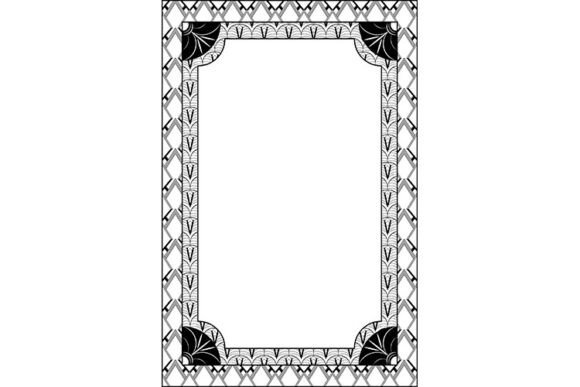
At its core, the Art Deco movement was defined by symmetry, streamlined forms, and lavish ornamentation. When adapted into a black-and-white format, these characteristics become even more pronounced. The Decorative retro frame made of geometric elements typically features sharp angles, sunburst motifs, stepped patterns, and intricate line work. These components work together to create a sense of rhythm and order.
For beginners, it might seem intimidating to incorporate such detailed designs. However, the monochromatic palette simplifies the process. Because you are not dealing with color theory conflicts, you can focus entirely on composition and balance. The stark contrast between black lines and white space ensures that the frame remains legible and impactful, regardless of the background it is placed upon.
This style supports several key design goals:
- Focus: It draws the viewer’s eye directly to the center, making it ideal for highlighting text or primary images.
- Elegance: The intricate details convey a sense of luxury and professionalism.
- Timelessness: Unlike trendy, fleeting designs, Art Deco has remained relevant for nearly a century.
Practical Applications for Creators and Businesses
One of the greatest strengths of these assets is their adaptability across different mediums. When you download a package containing EPS and JPG files, you gain the flexibility to use the frames in both print and digital environments. Here is how various professionals can leverage this style:
Event Stationery and Invitations
Wedding planners and couples often seek designs that feel special yet classic. A black-and-white Art Deco frame serves as a perfect border for save-the-dates, menu cards, and place settings. The geometric patterns add a touch of glamour without requiring expensive foil stamping or colored inks. For a DIY enthusiast, printing these on high-quality cardstock can achieve a premium look on a budget.
Branding and Marketing Materials
Small business owners and marketers can use these frames to create cohesive social media posts. Imagine an Instagram quote graphic or a promotional flyer for a jazz night or a fashion sale. The retro aesthetic aligns perfectly with industries such as beauty, hospitality, and entertainment. By placing key information within the geometric border, you create a structured layout that is easy to read and visually appealing.
Digital Content and Web Design
Bloggers and educators can use these frames to break up long articles or highlight important testimonials. In e-learning modules, a decorative border can distinguish case studies or key takeaways from the rest of the text. Since the files include JPGs, they can be easily uploaded to content management systems without needing complex editing software.
Working with EPS and JPG Files
When acquiring design assets, understanding file formats is crucial for getting the best results. A typical download for a Frame Art Deco Black and White will include both vector and raster formats, usually labeled as EPS and JPG. Knowing when to use each can save you time and prevent quality issues.
EPS (Encapsulated PostScript): This is a vector file format. Vector graphics are made of paths rather than pixels, meaning they can be scaled to any size without losing quality. If you are a professional designer using Adobe Illustrator, CorelDRAW, or Inkscape, the EPS file is your best friend. You can resize the frame to fit a business card or a billboard, and the lines will remain crisp and sharp. Additionally, vector files allow you to edit individual elements. You might want to thicken certain lines, remove a specific geometric shape, or change the black color to a dark gray to soften the contrast.
JPG (Joint Photographic Experts Group): This is a raster image format. JPGs are composed of pixels and are best used when you need a quick, ready-to-use image. They are ideal for users who do not have access to vector editing software. You can drag and drop a JPG frame directly into Microsoft Word, Canva, PowerPoint, or Photoshop. However, keep in mind that JPGs have a fixed resolution. If you enlarge them too much, they may become pixelated or blurry. Always check the resolution (DPI) of the JPG file before using it for large-format printing.
Key Considerations for Best Results
While using pre-made frames is convenient, there are important factors to consider to ensure your final design looks polished. First, pay attention to contrast and readability. Because Art Deco frames can be intricate, ensure that the text or image inside the frame does not clash with the border. If the frame has dense geometric patterns near the edges, leave enough padding between the border and your content. White space is your ally here; it allows the design to breathe.
Second, consider the context of your audience. While Art Deco is generally seen as elegant, it can also feel formal or distant if not balanced correctly. For casual brands or playful projects, you might pair the black-and-white frame with handwritten fonts or softer imagery to create a friendly juxtaposition. For corporate or luxury contexts, pair it with serif typography and clean, high-resolution photography.
Finally, think about printing requirements. If you are producing physical items, always prefer the EPS file for printing. Convert your text to outlines if necessary, and ensure your document color mode is set to CMYK for accurate color reproduction, even if the design is primarily black and white. Rich black (a mix of cyan, magenta, yellow, and black) often prints deeper and more solid than standard 100% black, giving your frames a more professional finish.
By understanding the nuances of the Frame Art Deco Black and White and utilizing the provided EPS and JPG files effectively, you can elevate your creative projects with ease. Whether you are designing for print or digital platforms, these geometric elements offer a timeless solution for adding structure, style, and sophistication to your work.