Integrating Golden Art Deco Seamless Patterns into Professional Design Workflows
In the landscape of modern graphic design and branding, the intersection of vintage aesthetics and contemporary utility creates a unique opportunity for visual storytelling. Golden Art Deco Seamless Patterns represent more than just a stylistic choice; they are a functional asset that, when integrated correctly, can elevate the perceived value of a project while streamlining the production process. For professionals ranging from marketing directors to freelance illustrators, understanding how to deploy these luxury decorative geometrical ornaments effectively is key to maintaining both artistic integrity and operational efficiency.
The core appeal of this aesthetic lies in its structured elegance. Unlike organic or free-form textures, gold geometric shapes and vintage pattern vector sets rely on mathematical precision and symmetry. This inherent orderliness makes them exceptionally versatile for workflows where consistency is paramount. Whether you are designing packaging for a high-end cosmetic line, creating backgrounds for a corporate presentation, or developing assets for a web interface, the predictability of seamless patterns allows for rapid scaling without sacrificing quality.
Strategic Placement in the Creative Lifecycle
Successful implementation begins with recognizing where these assets fit within your broader project timeline. Golden Art Deco Seamless Patterns are not merely final touches; they can serve as foundational elements during the conceptual phase, active components during execution, or refining details in the post-production stage.
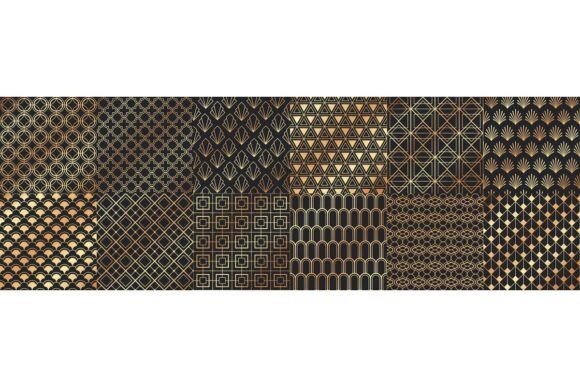
During the Planning Phase: Before a single pixel is rendered, selecting the right texture set informs the mood board and brand direction. A bundle of elegant retro textures featuring circles, squares, leafs, and waves provides a tangible reference point for stakeholders. By establishing the geometric language early, you reduce the risk of scope creep later in the project. For instance, deciding to use a wave-based motif versus a strict square-grid system dictates the layout constraints for typography and imagery downstream.
During Execution: In the active design phase, seamless patterns function as time-saving modifiers. Because they are tileable by definition, they eliminate the need to manually extend backgrounds or create complex repeating masks. This is particularly valuable when working with large-format prints or responsive web designs where screen real estate varies. Applying a vintage pattern vector set as a clipping mask or overlay layer allows designers to experiment with opacity and blending modes rapidly, testing multiple variations without rebuilding the composition from scratch.
Post-Production and Adaptation: Once the primary design is complete, these patterns offer flexibility for衍生 products (derivative works). A pattern used on a business card can be easily adapted for social media headers, email signatures, or merchandise. The scalability of vector-based gold geometric shapes ensures that the asset remains crisp whether it is viewed on a mobile device or a billboard, supporting a cohesive cross-channel strategy.
Technical Compatibility and Asset Management
To maximize the utility of Golden Art Deco Seamless Patterns, one must consider technical compatibility with existing software ecosystems. Most professional workflows rely on Adobe Creative Cloud, Affinity Designer, or similar vector-raster hybrid environments. When sourcing a luxury decorative geometrical ornaments pack, verify the file formats included. SVG and EPS files are ideal for vector editing, allowing you to recolor the gold tones to match specific brand guidelines (Pantone or CMYK values) without losing resolution. High-resolution PNGs with transparent backgrounds are essential for quick integration into raster-based tools like Photoshop or web builders.
Organization is another critical factor. A typical bundle may contain dozens of variations—circles, leaves, waves, and intricate lattices. Without a structured filing system, these assets become clutter rather than resources. Implement a naming convention that describes the motif and color profile (e.g., ArtDeco_Waves_Gold_Vector.svg). Tagging assets with metadata regarding their complexity and intended use case (background vs. border) can significantly reduce search time during high-pressure deadlines.
Workflow Integration Examples
Understanding the theory is useful, but seeing how these patterns function in real-world scenarios clarifies their practical value. Below are three distinct workflow applications:
- Packaging Design for Luxury Goods: A small business owner launching a premium candle line needs to convey opulence on a budget. Instead of commissioning custom foil stamping for every prototype, they apply a Golden Art Deco Seamless Pattern digitally to the mockup. This allows for rapid iteration of box designs. Once the design is finalized, the vector file is sent directly to the printer, ensuring the gold elements align perfectly with die-cut lines.
- Digital Marketing Campaigns: A marketing agency is running a "Great Gatsby" themed promotional event. They utilize a set of gold geometric shapes to create a consistent visual frame across Instagram stories, Facebook ads, and landing pages. By using a seamless wave pattern as a subtle background texture, they add depth to flat graphics without distracting from the call-to-action buttons. The seamless nature of the pattern ensures it loads quickly on web platforms while maintaining visual richness.
- Educational Materials and Presentations: An educator creating a history module on the 1920s uses vintage pattern vector sets to design slide decks and handouts. The geometric precision of the art deco style helps organize information visually, using borders and dividers to separate sections clearly. This enhances readability and engages students through period-accurate aesthetics, demonstrating how historical styles can serve modern pedagogical goals.
Maintaining Quality and Consistency
While the aesthetic appeal of Golden Art Deco Seamless Patterns is immediate, long-term success depends on quality control. Not all "gold" textures are created equal. Some may appear muddy or overly yellow when printed, while others might lack the necessary contrast for digital accessibility. It is crucial to test assets across different mediums before full deployment.
When integrating these patterns, pay attention to scale. A pattern that looks sophisticated on a large poster may appear noisy and chaotic when shrunk down for a favicon or mobile footer. Adjust the scale of the luxury decorative geometrical ornaments relative to the canvas size. Furthermore, ensure that the gold tones meet accessibility standards, particularly when placing text over these patterns. Using a solid color overlay with reduced opacity between the text and the pattern can improve legibility while retaining the textured look.
Consistency also extends to the mix of motifs. While a bundle may offer circles, squares, leafs, and waves, using all of them in a single project can result in visual dissonance. Select a primary motif (e.g., waves) and a secondary accent (e.g., simple geometric lines) to create a hierarchy. This disciplined approach prevents the design from feeling cluttered and maintains the sleek, streamlined essence of the Art Deco movement.
Long-Term Value and Adaptability
Investing in a high-quality Golden Art Deco Seamless Patterns collection is a strategic decision that pays dividends over time. Unlike trend-heavy graphics that may feel outdated within months, the Art Deco style possesses a timeless quality rooted in classical proportion. These assets can be archived and revisited for future projects, re-colored to fit new brand identities, or combined with modern minimalist elements to create a "neo-deco" hybrid style.
For freelancers and agencies, having a reliable library of these vectors reduces the time spent searching for stock assets or creating repetitive geometry from scratch. This efficiency translates directly to profitability, allowing more time to be dedicated to strategy and client communication. Moreover, the versatility of these patterns supports diverse industries, from hospitality and fashion to finance and tech, proving that vintage aesthetics have a robust place in contemporary commercial workflows.
Ultimately, the effective use of gold geometric shapes and vintage textures is about balance. It requires a designer to respect the historical roots of the style while adapting its application to modern technical requirements. By treating these patterns as integral components of a structured workflow—rather than mere decoration—creatives can produce work that is not only visually stunning but also operationally sound and commercially viable.