Choosing the Right Watercolor Cute Rainbow Clipart EPS for Professional and Personal Design Projects
In the realm of digital design, the choice of assets can significantly influence the final aesthetic and functionality of a project. For designers, educators, and hobbyists alike, finding illustrations that balance visual appeal with technical versatility is often a challenge. The Watercolor Cute Rainbow Clipart EPS has emerged as a popular resource for those seeking to infuse their work with warmth and charm. This specific type of clipart combines the organic, soft texture of hand-painted watercolors with the scalability of vector graphics, offering a unique solution for a wide array of creative needs.
Understanding what makes this format distinct, and how it compares to other available options, is essential for making an informed decision. Whether you are designing nursery wall art, educational materials, or commercial print products, evaluating the strengths and limitations of watercolor vector assets will help ensure your project meets both aesthetic and technical requirements.
Defining the Asset: What Is Watercolor Cute Rainbow Clipart EPS?
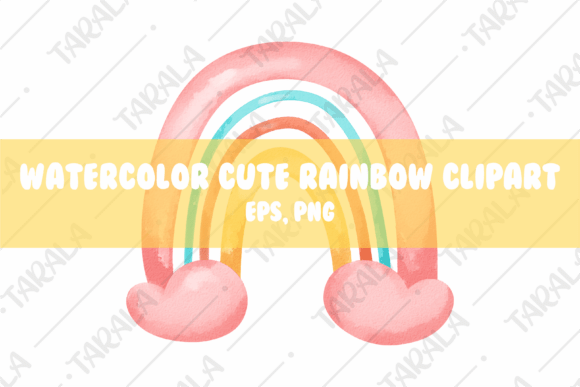
At its core, this asset is a digital illustration of a rainbow rendered in a soft, pastel watercolor style. However, the value lies not just in the image itself, but in the file formats provided. The term "EPS" refers to Encapsulated PostScript, a vector file format. Unlike raster images (such as JPEGs or standard PNGs) which are made of pixels, vector files are composed of mathematical paths. This means the image can be scaled infinitely without losing quality or becoming pixelated.
The "watercolor" aspect describes the visual style. It mimics the bleeding edges, soft gradients, and translucent layers characteristic of traditional watercolor painting. This style is particularly effective for themes involving childhood, spring, joy, and gentle education. When combined with the "cute" descriptor, it implies a simplified, approachable design language—often featuring rounded shapes and bright, inviting colors—that resonates well with younger audiences and family-oriented markets.
Typically, these packages include both the editable EPS vector file and a high-resolution PNG with a transparent background. The PNG, usually at 300 DPI and approximately 2000px on the longest side, serves users who do not have vector editing software, while the EPS caters to professional designers using tools like Adobe Illustrator or CorelDRAW.
Comparing Formats: Vector EPS vs. Raster PNG and JPG
When evaluating digital assets, understanding the tradeoffs between file formats is crucial. The Watercolor Cute Rainbow Clipart EPS offers distinct advantages over standard raster formats, but it also comes with specific requirements.
Scalability and Print Quality
The primary advantage of the EPS format is scalability. If you are designing a small digital sticker, a standard PNG may suffice. However, if you intend to print the rainbow on a large tote bag, a banner, or a wall mural, a raster image will likely appear blurry or pixelated when enlarged. The vector EPS allows you to resize the image to any dimension while maintaining crisp edges and smooth color transitions. This makes it an ideal choice for projects where the final output size is variable or unknown at the start of the design process.
Editability and Customization
Another significant differentiator is editability. With a JPEG or a flattened PNG, the image is static. You cannot easily change the color of a specific band in the rainbow or adjust the opacity of a single element. In contrast, the EPS file allows designers to ungroup elements, modify individual colors, and adjust layers. This is particularly useful for branding consistency, where you might need to match the rainbow’s pastel palette to a specific client’s brand guidelines. For users without vector software, the included PNG provides a ready-to-use alternative, though it lacks this level of customization.
Software Compatibility
While EPS is powerful, it requires specific software to open and edit. Programs like Adobe Illustrator, Inkscape (a free alternative), or Affinity Designer are necessary to leverage the vector benefits. If you primarily use Canva, Microsoft Word, or basic photo editors, the EPS file may be less accessible. In these cases, the high-resolution PNG included in the package becomes the primary asset. Therefore, the value of the EPS format is directly tied to the user’s technical skill set and software access.
Evaluating Use Cases: Where This Clipart Shines
The versatility of the Watercolor Cute Rainbow Clipart EPS makes it suitable for a broad spectrum of applications. Its soft, cheerful aesthetic is particularly effective in contexts that require a gentle, welcoming tone.
- Educational Materials: Teachers and curriculum developers often use these illustrations in worksheets, flashcards, and classroom decorations. The clear, simple shapes of the rainbow help in teaching colors and weather concepts to toddlers and preschoolers without overwhelming them with complex details.
- Nursery and Children’s Room Decor: The pastel color palette aligns perfectly with modern nursery trends, which favor muted, soothing tones over primary colors. These cliparts can be used to create custom wall art, mobile designs, or bedding patterns.
- Event Stationery: For baby showers, first birthdays, and spring-themed parties, this clipart adds a festive yet elegant touch to invitations, thank-you cards, and labels. The watercolor style feels more artisanal and personalized than generic clip art.
- Digital Products: Creators of digital planners, journals, and sticker sheets find these assets invaluable. The transparent background of the PNG file allows for easy layering over various backgrounds, while the vector format ensures that stickers remain sharp even when printed at small sizes.
- Print-on-Demand Products: Designers selling t-shirts, mugs, and tote bags benefit from the high resolution and scalability. The vector file ensures that the print quality remains high regardless of the product size, reducing the risk of customer complaints regarding blurry prints.
Limitations and Considerations
While the Watercolor Cute Rainbow Clipart EPS is a robust resource, it is not a one-size-fits-all solution. Recognizing its limitations helps prevent mismatched expectations.
Style Specificity: The watercolor style is inherently soft and diffuse. If your project requires sharp, geometric lines or a bold, high-contrast look, this clipart may not align with your visual goals. It is best suited for designs that aim for a handcrafted, organic feel.
Color Variability: Watercolor textures can sometimes appear differently on various screens and printers. While the digital file uses specific color codes, the final printed result may vary depending on the paper type and printing method. Designers should always request a proof when producing large batches of physical goods.
Licensing and Usage Rights: As with any digital asset, it is critical to review the license agreement. Some creators allow personal use only, while others permit commercial use with or without attribution. Ensure that the license covers your intended use, especially if you are creating products for sale.
Making the Right Choice: Decision Factors
When deciding whether to incorporate Watercolor Cute Rainbow Clipart EPS into your project, consider the following factors:
- End-Use Size: If the image will be printed larger than a standard sheet of paper, the vector EPS format is essential. For small digital uses, the PNG may be sufficient.
- Design Flexibility: Do you need to change colors or rearrange elements? If yes, the EPS file is necessary. If you need a plug-and-play solution, the PNG is more convenient.
- Target Audience: Is your audience young children, parents, or educators? The cute, soft aesthetic resonates strongly with these groups. For corporate or formal contexts, a more minimalist or realistic style might be appropriate.
- Technical Proficiency: Are you comfortable using vector editing software? If not, ensure the package includes high-quality PNGs that meet your resolution needs.
In conclusion, the Watercolor Cute Rainbow Clipart EPS represents a thoughtful blend of artistic charm and technical utility. By offering both vector and raster formats, it accommodates a wide range of users, from professional designers to casual crafters. Its soft, inviting style makes it an excellent choice for child-focused, educational, and celebratory designs. However, success depends on matching the asset’s capabilities with your specific project requirements. By carefully considering scale, editability, and audience, you can leverage this resource to create designs that are not only visually appealing but also technically sound.